


Waterfront vs. Water-View on Lake Norman: The Six-Figure Difference Nobody Explains
The view may sell the dream—but legal, usable access determines the value
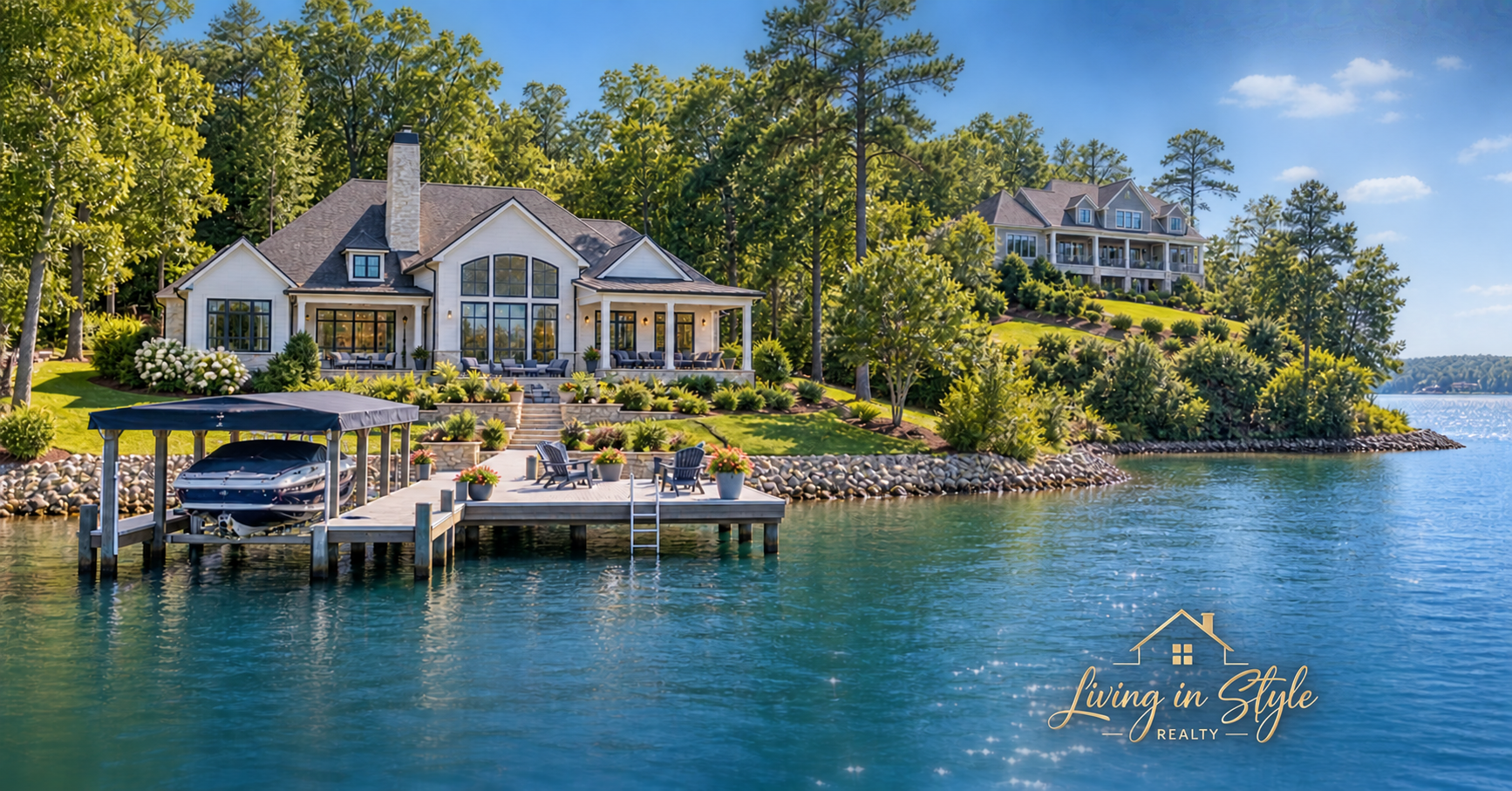
Two Lake Norman homes can photograph almost identically. Both may have sparkling blue water outside the windows, sunset views, and a premium price. Yet one may offer direct shoreline access, an existing permitted dock, and practical year-round boating. The other may simply overlook the lake.
That distinction can represent a six-figure difference in price, long-term value, and resale appeal. The exact premium varies by location, water depth, improvements, view quality, and current market conditions, but the principle is consistent: a water view is visual; true waterfront is a combination of ownership, access, usability, and permitting.
For buyers comparing Lake Norman waterfront homes, the most important questions are often not visible in the listing photos. Can you legally reach the shoreline from the property? Is the dock permitted? Can it be repaired, expanded, or replaced? Is the water deep enough for your boat? Does the lot slope make everyday lake access difficult or expensive?
These details can turn a dream property into an exceptional investment—or an expensive disappointment.
What is the difference between waterfront and water-view property?
A water-view home has a visible view of Lake Norman but may not touch the shoreline or include any legal right to access the water. The view may cross another parcel, a community common area, a road, protected land, or neighboring property. Trees and future construction may also affect a view that is not legally protected.
A waterfront home generally adjoins the lake or the project boundary surrounding it. However, even direct frontage does not automatically guarantee a private dock, a sandy beach, deep water, or unrestricted shoreline use.
That is why buyers should avoid treating “waterfront,” “water access,” “water view,” “deeded boat slip,” and “community lake access” as interchangeable terms. Each describes a different bundle of rights and amenities.
Quick answer for voice search
Why are Lake Norman waterfront homes more expensive than water-view homes? Waterfront homes may provide direct shoreline access, boating convenience, dock rights, greater privacy, and stronger buyer demand. Water-view homes offer scenery but may not include legal access to the lake or the ability to build or maintain a dock.
The dock is valuable—but the permit may be even more important
On Lake Norman, a dock should never be evaluated as just another physical improvement. Buyers need to understand its permitting history and whether it complies with current shoreline requirements.
Duke Energy manages shoreline activities across the Catawba-Wateree reservoir system through its Shoreline Management Plan. Work involving docks, piers, shoreline stabilization, excavation, vegetation, and other activities within the lake boundary may require prior approval. Duke Energy directs applicants to its shoreline permitting resources and Lake Access Permit System.
Before purchasing, buyers should verify:
Whether the existing dock or pier has a valid permit and matching records
Whether ownership and permit records can be properly transferred
Whether repairs, replacement, expansion, a boat lift, or other changes require new approval
Whether the shoreline qualifies for a new dock if no structure currently exists
Whether environmental, navigation, property-line, cove-width, or classification restrictions apply
Whether county, municipal, HOA, building, or electrical approvals are also required
Never assume that an old dock can automatically be rebuilt in the same form, or that neighboring docks prove a vacant shoreline is dockable. The rules, site conditions, classifications, and permitting history may differ from one parcel to the next. Duke Energy also notes that lake-use permits are time-limited, so buyers planning new work should confirm current requirements and timing before closing. See Duke Energy’s Lake Use Permitting FAQs for current guidance.
The hidden value of usable water
A permitted dock is only part of the equation. The water itself must work for the buyer’s intended lifestyle.
A wide main-channel setting may offer panoramic views and convenient boating, but it can also bring more wake, wind, traffic, and exposure. A protected cove may feel quieter and safer for swimming, yet seasonal water depth, sediment, or a long idle to open water may reduce its appeal for certain boat owners.
Important questions include:
What is the water depth at the dock during typical seasonal conditions?
Does the cove become shallow during lower lake levels?
Can the buyer’s boat safely enter, turn, and dock?
Is the location exposed to heavy wake or wind?
Is the shoreline suitable for swimming, kayaking, or paddleboarding?
How long does it take to reach open water, dining, marinas, or favorite recreation areas?
“Deep water” should be verified, not accepted as a vague marketing phrase. A depth measurement taken once may not tell the full story. Buyers should consider the measuring location, date, lake level, and the draft requirements of their boat.
Extra subheading: The lot slope can quietly reshape your entire budget
Lake Norman’s terrain creates dramatic views, but a steep lot can add cost and reduce everyday enjoyment. A home may sit high above the water with a breathtaking view while requiring a long staircase to reach the dock. That difference matters for children, older adults, guests, pets, carrying coolers, and routine dock maintenance.
Slope may also affect:
Drainage and erosion control
Retaining walls and shoreline stabilization
Landscaping and equipment access
Patio, pool, terrace, or outdoor-kitchen feasibility
Accessibility and the number of steps to the water
Foundation design and future improvements
Maintenance costs after severe weather
A steep lot is not automatically a negative. For some buyers, elevation creates privacy, architectural drama, and a superior long-range view. The issue is whether the slope fits the buyer’s lifestyle and whether the improvement costs have been included in the purchase decision.
Buyers considering major improvements should consult the appropriate licensed professionals before closing. Depending on the property and the intended work, that may include a surveyor, engineer, general contractor, shoreline contractor, permitting authority, and insurance professional.
Extra subheading: Seven questions to answer before paying the waterfront premium
The best waterfront due diligence begins before the offer—or is protected by appropriate contract terms when verification must occur later.
Where is the legal boundary? Obtain and review a current survey rather than assuming the maintained yard extends to the water.
What rights transfer with the property? Confirm shoreline access, dock rights, deeded slip rights, easements, and shared-access obligations in writing.
Is the dock permitted? Request the permit, approved plans, repair history, and any correspondence affecting the structure.
Is the water usable for your boat? Verify depth, navigation, exposure, and seasonal conditions.
What will the slope cost you? Evaluate stairs, retaining walls, drainage, accessibility, and planned outdoor improvements.
Are there additional restrictions? Review HOA documents, local zoning, setbacks, flood information, and applicable shoreline rules.
Will the feature hold its value? Compare the property with genuinely similar waterfront sales—not merely nearby homes with lake views.
Why this difference matters when selling a Lake Norman home
Sellers should market waterfront benefits with precision. A permitted dock, deep-water access, gentle lot, protected cove, main-channel view, shoreline improvements, or deeded boat slip can materially influence positioning—but each claim should be supported.
Strong waterfront marketing does more than say “lake life.” It explains the experience and documents the value:
Distance and ease of travel from the home to the dock
Dock configuration, condition, and documented permitting status
Approximate water depth with appropriate context
Cove or main-channel location
Sunrise or sunset orientation
Boating access to marinas, dining, and recreation
Lot usability, outdoor-living areas, and shoreline condition
Clear documentation helps qualified buyers understand why one property deserves a premium over another and reduces uncertainty during due diligence.
Frequently asked questions
Does every Lake Norman waterfront lot qualify for a dock?
No. Direct frontage does not automatically guarantee approval for a new dock. Eligibility depends on the parcel, shoreline classification, site conditions, navigation, environmental considerations, applicable guidelines, and current approvals.
Is a deeded boat slip the same as owning waterfront?
No. A deeded or assigned slip may provide valuable boating access without private shoreline frontage. Buyers should review how the slip transfers, applicable fees, association rules, location, dimensions, and any use restrictions.
Can I renovate an existing Lake Norman dock after closing?
Possibly, but do not assume every repair or modification is automatically allowed. Confirm the structure’s permitting history and obtain required approvals before beginning work.
Is a steep waterfront lot worth less?
Not necessarily. A steep lot may deliver exceptional views and privacy, while a gentle lot may offer easier access and broader outdoor usability. Value depends on buyer priorities, construction feasibility, and the cost of maintaining or improving the site.
What should I verify before buying a Lake Norman waterfront home?
At minimum, verify the survey and boundaries, shoreline and dock permits, access rights, water depth, lot slope, flood considerations, HOA restrictions, and the feasibility of planned improvements.
The bottom line: buy the rights and usability—not just the view
The six-figure difference between waterfront and water-view property is rarely explained by scenery alone. It is created by the combination of legal access, dock status, water depth, shoreline conditions, lot usability, privacy, and buyer demand.
A beautiful view can be emotionally powerful. But when you are investing in Lake Norman real estate, the smartest decision comes from understanding exactly what you own, what you may use, what you may change, and how easily you can enjoy the water.
Ready to compare Lake Norman waterfront homes with confidence?
Before paying a waterfront premium—or pricing a lake property for sale—work with a local real estate professional who understands the questions hidden beyond the listing photos.
Contact Javier Sims Davila, Broker-in-Charge of Living In Style Realty, for strategic guidance on waterfront, water-view, luxury, relocation, and investment properties throughout Lake Norman and the surrounding North Carolina communities.
Explore Lake Norman real estate and premier listings or request your personalized home valuation today.
This article is for general informational purposes and is not legal, engineering, environmental, insurance, or permitting advice. Rules and property conditions can change. Buyers and owners should confirm current requirements directly with Duke Energy, the applicable government authorities, their closing attorney, and qualified professionals.
About the Author
With more than 30 years of client-forward service, Javier Sims Davila is a respected Broker-in-Charge known for his market knowledge, proven leadership, and skilled negotiation. Through Living In Style Realty, in partnership with Southern Homes of the Carolinas, Javier provides strategic, client-focused representation designed to protect his clients’ interests and deliver successful results throughout Lake Norman and the surrounding North Carolina communities.
Check out this article next